Dandruff Treatment
Dandruff is a
very common scalp condition involving excessive flaking of the skin. Dandruff
is not dangerous, does not cause baldness and is not contagious.
Dandruff Treatment Principles
1. Symptomatic Treatment
· To decrease the formation of scales (desquamation)
· To reduce the itching sensation (pruritus)
It is often accomplished by washing hairs frequently with ordinary shampoo. This outcome is because of the presence of surfactants which are present in the shampoo but it is generally a temporary treatment.
2. Causal treatment
· Reduction in inflammation of scalp.
· Reduction in Malassezia
· Reduction of skin cells proliferation
The anti-fungal agents and anti-squamolytic agents are usually repeatedly used.
Anti-squamolytic agents reduce proliferation of skin and thus it stimulates desquamation which may include coal tar and salicylic acid.
3. Relapse Prevention
· Inhibiting the growing aging of the Malassezia
· Use of anti-fungal shampoos at fixed time intervals that can be twice in a month can stop the growth of yeasts on the scalp.
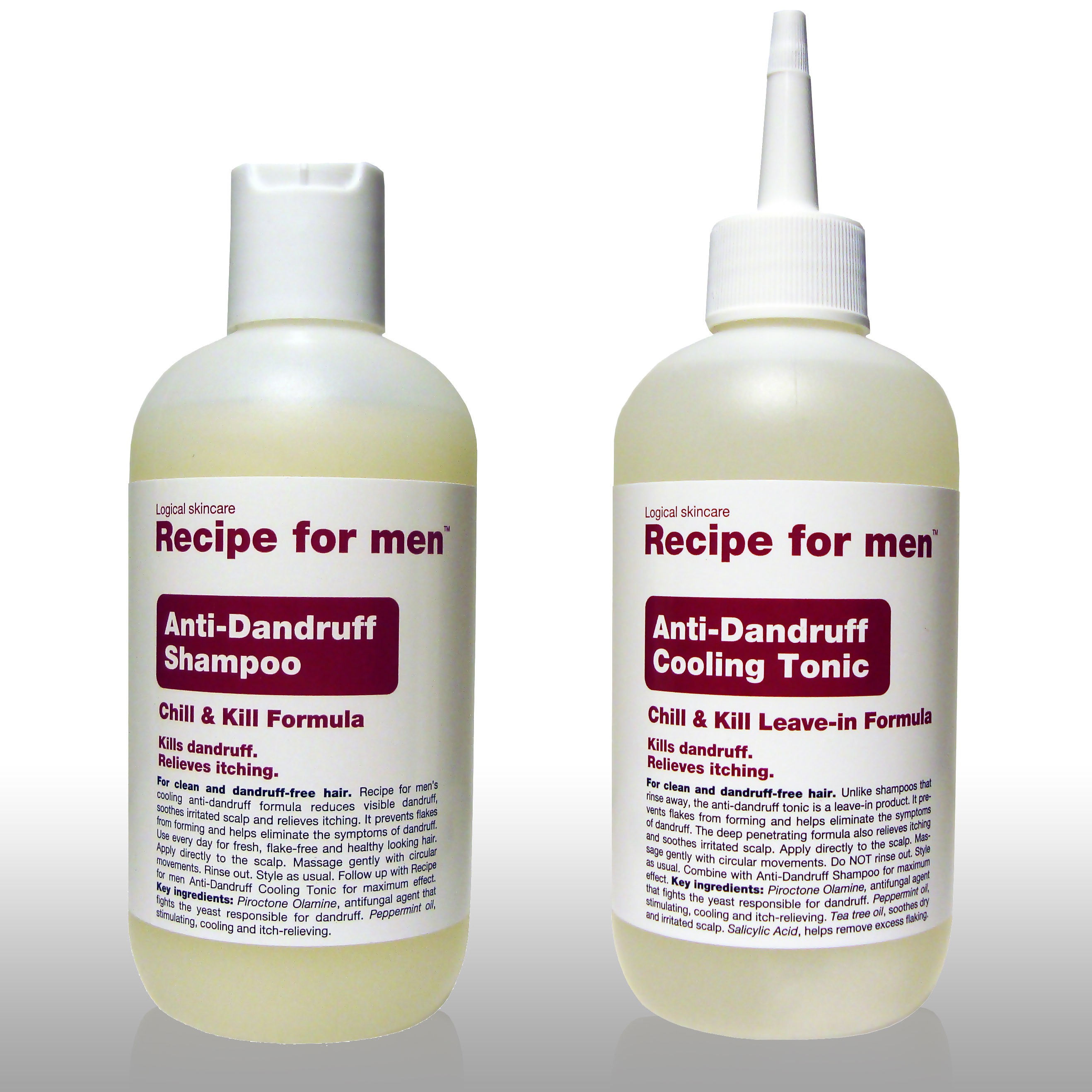
Ketoconazole has demonstrated its superiority in terms of antifungal activity against Malassezia.
Coal tar is most frequently being used.
The rules of pharmacological dandruff treatment were summarized and codified in “Consensus of the expert group of Polish Dermatological Society Mycological Section on dandruff therapy”.
Recommended formulas were classified into three group based on the mechanism of action.
1. Fungicidal subastances (zinc pirythioniate, imidazole, ketoconazole)
2. Cytostatic substances (tar, selenium sulphide, octopirox)
3. Keratolytic substances (tar, salicylic acid, urea, sulphur compounds)
Cytostatic & keratolitic agents are for symptomatic management only & recurrence is observed after stopping the treatment. Therefore, these groups of agents are recommended in politherapy.
Octopirox is cytostatic agent with additional antibacterial and antimycotic activity
Ketoconazole is an imidazole antimycotic agent and has been used orally for the treatment of multiple mycoses & efficaciant against pityriasis capitis and seborrheic dermatitis. Ketoconazole binds and inhibits cytochrome P450 14-alpha-demethylase (enzyme required for the formation of ergosterol from lanosterol i.e. blocks fungal synthesis of ergosterol--- an essential constituent of fungal cell membranes).
Coal tar is approved for over-the-counter treatment of dandruff, seborrheic dermatitis and psoriasis reduces epidermal cells (size & number), epidermal proliferation and dermal infiltrates.
Salicylic acid is approved for over-the-counter treatment of dandruff, seborrheic dermatitis and psoriasis is an exfoliant that loosens weakly adherent flakes,enabling them to be washed away.
Salicylic acid, liquor carbonis & sulfur have exfoliative qualities to improve the appearance of scaling, while the antimitotic effect of topical corticosteroids and coal tars might also be involved in reducing the hyperproliferation associated with dandruff scaling.
Zinc pyrithione (ZPT) is a biocide & it is only sparingly water-soluble, allowing efficient scalp retention after rinsing. This attribute has led to ZPT becoming the most common material used for dandruff treatment globally. More about Dandruff Shampoo.
Tacrolimus has been shown to have potent antifungal activity against Malassezia furfur in vitro. Tacrolimus and pimecrolimus may be effective as they possess both anti-inflammatory and antifungal activity.
Dandruff Treatment Principles
1. Symptomatic Treatment
· To decrease the formation of scales (desquamation)
· To reduce the itching sensation (pruritus)
It is often accomplished by washing hairs frequently with ordinary shampoo. This outcome is because of the presence of surfactants which are present in the shampoo but it is generally a temporary treatment.
2. Causal treatment
· Reduction in inflammation of scalp.
· Reduction in Malassezia
· Reduction of skin cells proliferation
The anti-fungal agents and anti-squamolytic agents are usually repeatedly used.
Anti-squamolytic agents reduce proliferation of skin and thus it stimulates desquamation which may include coal tar and salicylic acid.
3. Relapse Prevention
· Inhibiting the growing aging of the Malassezia
· Use of anti-fungal shampoos at fixed time intervals that can be twice in a month can stop the growth of yeasts on the scalp.
Ketoconazole has demonstrated its superiority in terms of antifungal activity against Malassezia.
Coal tar is most frequently being used.
The rules of pharmacological dandruff treatment were summarized and codified in “Consensus of the expert group of Polish Dermatological Society Mycological Section on dandruff therapy”.
Recommended formulas were classified into three group based on the mechanism of action.
1. Fungicidal subastances (zinc pirythioniate, imidazole, ketoconazole)
2. Cytostatic substances (tar, selenium sulphide, octopirox)
3. Keratolytic substances (tar, salicylic acid, urea, sulphur compounds)
Cytostatic & keratolitic agents are for symptomatic management only & recurrence is observed after stopping the treatment. Therefore, these groups of agents are recommended in politherapy.
Octopirox is cytostatic agent with additional antibacterial and antimycotic activity
Ketoconazole is an imidazole antimycotic agent and has been used orally for the treatment of multiple mycoses & efficaciant against pityriasis capitis and seborrheic dermatitis. Ketoconazole binds and inhibits cytochrome P450 14-alpha-demethylase (enzyme required for the formation of ergosterol from lanosterol i.e. blocks fungal synthesis of ergosterol--- an essential constituent of fungal cell membranes).
Coal tar is approved for over-the-counter treatment of dandruff, seborrheic dermatitis and psoriasis reduces epidermal cells (size & number), epidermal proliferation and dermal infiltrates.
Salicylic acid is approved for over-the-counter treatment of dandruff, seborrheic dermatitis and psoriasis is an exfoliant that loosens weakly adherent flakes,enabling them to be washed away.
Salicylic acid, liquor carbonis & sulfur have exfoliative qualities to improve the appearance of scaling, while the antimitotic effect of topical corticosteroids and coal tars might also be involved in reducing the hyperproliferation associated with dandruff scaling.
Zinc pyrithione (ZPT) is a biocide & it is only sparingly water-soluble, allowing efficient scalp retention after rinsing. This attribute has led to ZPT becoming the most common material used for dandruff treatment globally. More about Dandruff Shampoo.
Tacrolimus has been shown to have potent antifungal activity against Malassezia furfur in vitro. Tacrolimus and pimecrolimus may be effective as they possess both anti-inflammatory and antifungal activity.
|
Summary of the products used in the treatment of dandruff |
|
|
Imidazole formulas |
Ketoconazole 2% or 1 % Clotrimazole Flutrimazole Econazole Bifonazole |
|
Zinc pirythione |
Therapeutic shampoos |
|
Cytostatic formulas |
Tars Selenium sulphide Piroktolamine Cyclopiroxolamine 1.5% |
|
Keratolytic substances |
Cocois: tar, precipitated sulphur, salicylic acid, & coconut oil Provictiol: urea & salicylic acid |
|
Complex formulas |
Ocerin PTZ: urea, undecenoic acid derivatives and ZPT Ocerin OPX: urea, undecenoic acid derivatives and octopirox Salikar: salicylic acid and piroktolamine Mediket Plus: ketoconazole 1% & octopirox Kerium |
